

Landscape plants suffered worst beating in 25 years
May 23rd, 2014
The verdict is in. The 2013-14 winter was the most plant-damaging one in central Pennsylvania in 25 years.
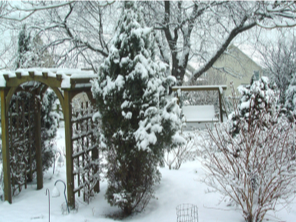
Ice and wet snow sagged our ubiquitous arborvitae and snapped limbs off most white pines.
A string of frigid winds browned our evergreen leaves and denuded normally winter-hardy azaleas and ivy.
And if that wasn’t bad enough, season-long frozen soil and some of the coldest temperatures in two decades combined to kill borderline-hardy trees and shrubs that had become “safe bets” lately.
“This winter was one of the worst I’ve seen in 25 years for the amount of damage,” said Boiling Springs arborist Eric Vorodi.
“It was a brutal winter,” agreed Jamie Shiffer, the grounds and horticulture operations manager at Hershey Gardens, which lost an array of roses and flowering shrubs. “It’s the worst I’ve seen since I’ve been here, and that’s almost 25 years. We’re still hoping some things will push new growth.”
Landscape evergreens took a particular beating – especially recently planted ones, ones sited in windy areas, ones only marginally winter-hardy to Harrisburg and ones with broad leaves instead of needles.
Among the worst hit: Leyland cypress, cherry laurel, nandina, hardy camellia, mahonia and azalea.
That wasn’t all.
Eric Sweigard of Palmyra lost two 8-year-old rhododendrons and saw a normally evergreen groundcover of ivy go completely brown.
“The rhododendrons went quick, around the end of February,” he says. “My ivy of the past 25-plus years looks like it’s on life support.”
As with most gardeners, Trish Foster of Hummelstown has been waiting to see if her crape myrtle is dead or just killed back to the roots.
“It has a lot of new growth right at the base, but on the older, longer branches… zero,” she says.
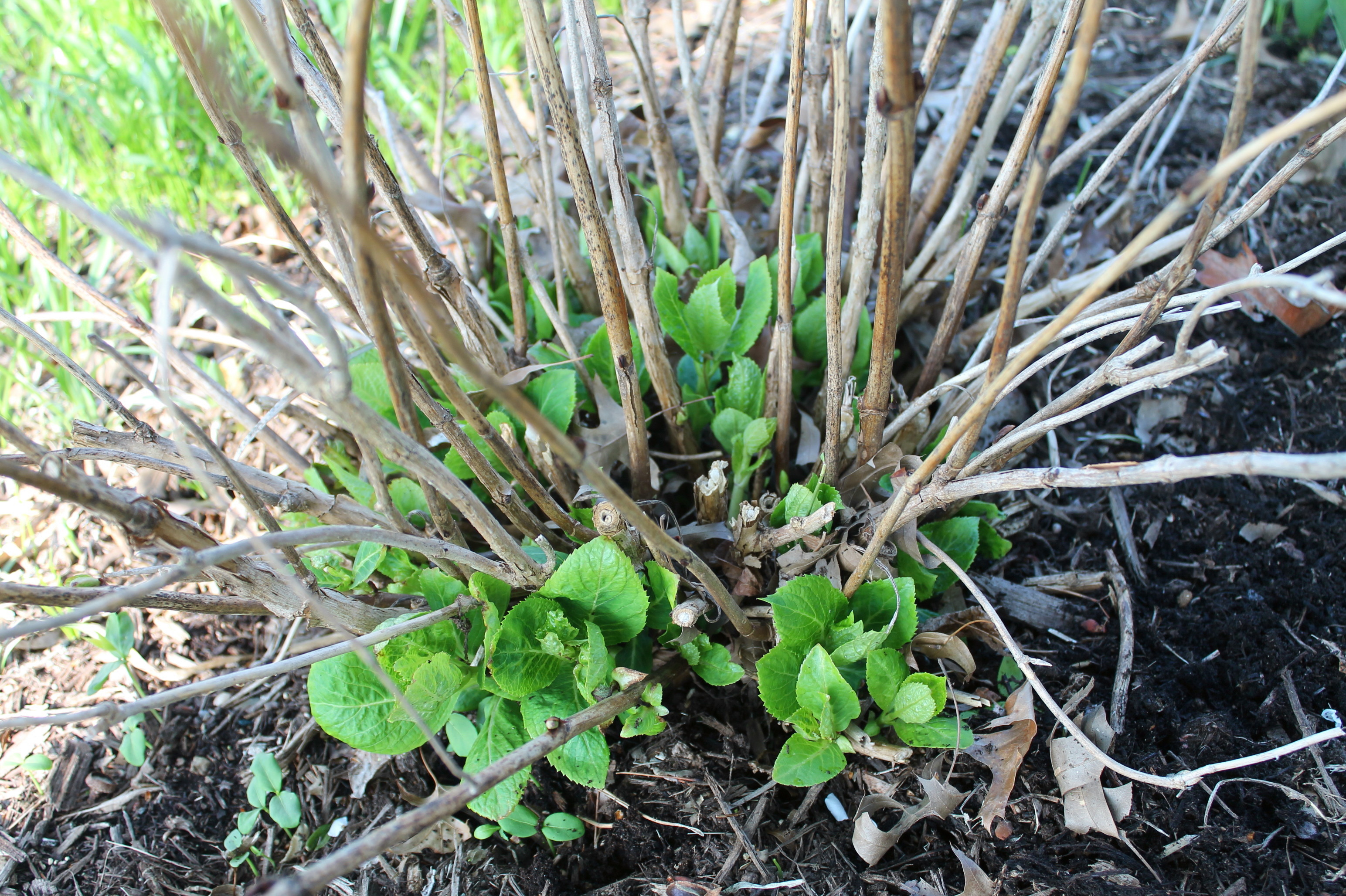
That’s been the widespread case with mophead hydrangeas and butterfly bushes – flowering shrubs that weather a usual winter just fine. Most branches this year are dead with new growth emerging from the base or the roots.
For mophead hydrangeas, the dieback likely will mean few or no blooms this season. Butterfly bushes flower on new growth, so they should recover and bloom normally.
This hydrangea has died back nearly to the ground, but it’s still alive. Note the new growth pushing out from the base.
Winter’s wrath went well beyond just the “wimpier” species.
Donna Chamberlain of Pine Grove lost a pair of 5-year-old Hinoki cypresses – a needled evergreen that’s winter-hardy into New England.
Erica Shaffer, manager at Highland Gardens in Lower Allen Twp., lost a pair of Japanese maples that were planted in pots. In the ground, those are hardy to New England, but they weren’t able to survive the more vulnerable above-ground pot setting this winter.
Marcia Drew of Hampden Twp. was surprised that two of her six KNOCK OUT (R) roses are dead to the ground.
Some butterfly bushes are goners, too, not just “top-killed.”
“I’m darned surprised at that one,” says Bob Carey, a Hampden Twp. arborist and host of the Garden Talk radio show on Carlisle’s WIOO-AM. “In a normal season, you can cut a butterfly bush back to nothing, and it comes back.”
Plant experts say the cumulative effect of multiple winter insults are to blame as opposed to any single event.
One factor was the flat-out cold nights.
“We had cold temperature readings in January that we have not experienced in 20 years,” said Annette MaCoy, a Penn State Extension educator in Cumberland County.
She says wind and the root condition of plants also played roles in what lived and what died. Evergreens planted in the past year and ones with weak roots in bad soil generally fared worse, she says.
Highland Gardens’ Shaffer chalks most of the winter woes up to the “ol’ one-two punch” of wind on top of cold.
“I think the sustained winds with extended low temperatures, repeating as the three polar vortices came through, did them in,” she says. “Maybe one of them might have made plants only shiver, but three? That’s agony.”
Vorodi says the long-frozen soil was a particular blow to broadleaf evergreens, such as holly, cherry laurel, azalea and rhododendron.
Broad-leafs continue to lose moisture over winter through their foliage, and when the ground stays frozen for long periods of time, moisture is locked and unavailable for the roots to take up.
“Plants can’t replace the lost water in the foliage,” he explains, and that leads to browning around the leaf edges and then to complete browning, leaf drop and plant death if the “overdrawn” water account gets bad enough.
The good news is that many browned-out or denuded plants are pushing new growth. That’s happening because the branches survived even though the leaves did not.
The weather hasn’t cooperated on that recovery either.
Cold temperatures continued into early spring, and the cool startup delayed recovery by 2 to 3 weeks. It’s only been in the last week or so that some apparently dead plants started poking out new little leaves.
You might want to wait another couple of weeks before ultimately deciding whether to throw in the towel.
Dead wood can be cut off back to live shoots or the whole way back to new basal growth, as in the case of most hydrangeas, butterfly bush and crape myrtles. Check out a related article I did for a case-by-case rundown on what to do about damaged plants.
Plants that are showing no sign of any life by mid-June? Those are probably lost causes.
Brandon Kuykendall, the assistant nursery manager at Ashcombe Farm and Greenhouses in Monroe Twp., says a lot of gardeners apparently aren’t waiting that long.
“Our azaleas are pretty much sold out at this point, and I have a feeling many people wanted to replace ones that lost their leaves over the winter.”
This winter’s experience also has gardeners rethinking whether it’s worth investing in plants that push our winter-cold envelope.
Fare such as nandina, Leyland cypress, crape myrtle, sweetbox, osmanthus and hardy camellia might do fine in 15 straight winters, but when a colder-than-usual one inevitably comes along, they can all die back to the roots or croak altogether.
Says Carey: “Just about the time you go, ‘Yup, this thing is good on its own,’ along comes something like this to whack it.”
“For marginally hardy plants, this is the winter that might have done them in,” adds MaCoy.
Vorodi says some of the decision will boil down to patience.
“Let’s say you have a line of 18- or 20-foot Leyland cypresses and now the outer 6 inches are all brown or dead,” he says. “They might sprout new growth from the interior, but how many people are going to tolerate what they look like in the time it takes for that to happen?”
Answer: Some will, others won’t.
Which is why Vorodi suspects this is going to be a good year for garden centers selling replacement plants.



Hi George,
Thanks for the article. For those who lost English ivy and Buddleia, now might be a convenient opportunity to replace these invasive plants, perhaps with natives or other pollinator / bird friendly plants. I myself lost 3 “youngish” crape myrtle. The woman who said “Just when you thought you could leave it alone…” resonated with me. I’m considering indigenous viburnum (or cultivars).
If only tree of heaven bit the dust! I have heard from an entomologist that Brown Marmorated Stink Bug favors this tree as a host. I should have jotted down the experts name — he was speaking at an agricultural conference. Can you find anything on this subject and verify? If this is true, what a great way to get rid of two invasives! I figure that when people hear that BMSB loves this tree, squads of homeowners may cruise the road sides with chain saws and a dab of glyphosate. Hmmm, that image may be inspiration for a scary horticultural movie thriller!
Thanks again, George.
Hi George,
Have you seen any shrubs that are alive and green on one side but completely dead on the other side? I have a Witch Hazel like that (about 10 years old) and a neighbor has a full-sized barberry doing the same thing. I don’t know whether to be patient for a few more weeks or to pronounce them dead?
Patti at Bent Creek Crossing
Thank you so much for writing this George. I lost many plants. I am going to post on my Timeline so I can re-read. Great story…
Patti,
Yes, that can happen. It’s usually caused by something that insults or assaults the plant from one side, such as salty slush being plowed against the road-side of a plant or herbicide drift from a neighbor’s weed-control attempt. Brutal hot sun can burn out the west side of a shade-preferring plant, and the back sides of foundation evergreens often eventually “bare out” due to the lack of sun to that part of the plant.
Root damage and bug or disease are other possibilities, although bugs more often cause random or spotty damage, and disease often works its way from bottom to top.
Both of those plants are tough ones and unlikely to run into this kind of trouble. They’re also two different species and highly unlikely to run into the same bug or disease problem. I’d look for site clues to see if the damage is to the same side of both plants, then try to determine if any plant-damaging activities are common to both.
If you aren’t seeing any new leaves poking out of the bare branches, that area is probably dead and will have to come off. You could wait a few more weeks just to be sure before cutting anything. Eventually, dead branches will snap when you bend them.
George
Sarah,
A lot of people will be replacing a lot of plants, so this will be a good season to generally improve our landscape “gene pool” with better choices. I just hope people don’t get discouraged, throw in the towel and replant in grass. Or concrete.
On stink bugs and tree-of-Heaven, I know that weed tree is one of the stink bug’s favorite host plants. I doubt they’ll do enough feeding damage, though, to make a dent in the tree-of-Heaven population. But at least it’s one setback. Stink bugs aren’t terribly picky, and they’ll go to dozens of other host plants if they can’t find tree-of-Heaven — or if vigilante homeowners go on that two-for-one raid you mention.
George
Hi George,
I was wondering whether to cut back my hydrangeas or still wait a while. After reading your article I think I’ll cut them back since there is new growth at the base. I also have two oakleaf hydrangeas that I planted last year and they’re starting to show some growth. Believe it or not, our azaleas had the most beautiful blossoms this year than ever before. They’re about twelve years old. Our cherry laurels are slowly recovering; lots of brown leaves, but it looks like they’ll be okay. Thanks George.
Millie,
I just saw new buds poking out of apparently dead hydrangeas just last week, so it’s possible a few more plants might surprise people. I’d give them another week or two to be sure. Hydrangea branches that haven’t leafed by now are probably dead, but there’s no harm in giving it a little more time since the season is running late. They’ll recover from the basal growth.
George
It’s easy to tell if a dead looking branch or plant is alive. Just scrape the bark on a twig or two with your pocket knife. If it’s green under the bark leave it alone. If there’s no green cambium all the way back to the ground it may still sprout from the base. Then cut it off. If nothing by mid June then get out the shovel.
I had some dianthus and mums that were very slow to start this spring. Two of the dianthus have only one stalk so far and one mum hasn’t shown up yet but it was accidentally planted on top of some deeper bulbs. Bushes are fine. I’m amazed and thankful.
Brooke (Quincy, Franklin Co.)
Help! My 60″ X 8 ” of ivy wall surrounding my patio died during the harsh winter of 2014. Cut off most of
the sticks that weren’t intertwined in the lattice. Some ivy starts appearing at the bottom… but it’s July. Was used to having a beautiful green wall year round.Even beautiful in winter with snow on the ivy! It took 10 years to grow. Is there anything that is green
year round in Southern Ohio that will grow quickly to cover the lattice until the ivy grows back? I have clamatis that survived on these fences… but not enough to cover all the ugly brown dead vines. Thanks for
any suggestions you can give me!
Diane,
This was a rarity to kill ivy. It’ll grow back fairly fast, but if you want to fill in with something yet this year, purple hyacinth beans grow about as fast as anything. It’ll die with frost, though. I’d probably just cut off all the dead ivy vines and wait for the ivy to fill back in. You could add a few additional ivy plants if many died right to the ground.
George
Thank you for your article. I grew up in Palmyra and now work in Monroe Twp., so the comments from people in those places made me feel “at home.” I lost 7 small shrubs, boxwoods and azaleas this past winter, which I blamed on the severe conditions. I never thought my hydrangea bushes wouldn’t produce new blooms. I’m relieved to learn that the severity of this past winter was the cause. I have eight hydrangea bushes and they all looked like the one pictured; not a bloom in sight. Ah well, next year should be back to normal. I have one question, when should I fertilize again? It’s almost the end of July. What would be the best time? Thanks for your article.
Hi Lori,
Yeah, the winter was bad, but it’s been amazing to see how late some things have still managed to push out new life. I’ve been hearing a lot of stories about that. It’s the topic of my e-column this week at http://georgeweigel.net/georges-current-ramblings-and-readlings/recovery-and-bugs-in-the-eye#more-6707.
As for fertilizing, I’d wait until the end of winter (late March to early April) to fertilize your hydrangeas, assuming they need it. Much of the time, established trees and shrubs need no regular fertilizing.