

10 Landscape Plants You’ll Probably Kill
1.) Mountain laurel. Yeah, it’s Pennsylvania’s state flower, but it wants to grow in the humusy soil and dappled sunlight of woodlands – not in the baked clay of your sunny backyard. These also don’t transplant terribly well, don’t like our alkaline-leaning soils (especially near house foundations) and is prone to root rot. I seldom see even halfway-healthy mountain laurels in central-Pa. landscapes.
2.) Azalea. Give ‘em the right conditions, and they can bloom beautifully and live for decades. However, planted too deeply in clay or poorly drained subsoil (as so often happens) and then buried in mulch (also as so often happens), they have a high death rate. Toss in weakness to drought, dislike of alkaline soil and almost guaranteed attacks by lacebugs, and it’s no wonder so many of these bite the dust in the first year or two. Many others struggle by sickly for years before a drought finishes them off.

A rhododendron dying a slow phytopthora root-rot death.
3.) Rhododendron. A little more forgiving than azaleas but also prone to the same drawbacks. These also often run into the gradual death of phytopthora root rot, especially when planted too deeply and/or mulched too heavily. Also prone to borers and weevils.
4.) Japanese andromeda (Pieris japonica). Another broadleaf evergreen bloomer that the lacebugs just won’t let alone. Also prone to root rot, particularly in poorly drained clay and when planted too deeply or mulched too heavily. (Are you seeing an “operator-error” pattern here?) Even many of the survivors lose branches regularly and look pretty discolored in summer from lacebug damage.
5.) American dogwood. Three big hurdles: anthracnose leaf disease (a slow drain on health), borers (faster killers) and powdery mildew (more cosmetic than deadly). A lot of dogwood death traces back to site choice. They want to grow in humusy soil along wood edges, we stick them a foot too deep in full sun and solid clay.

A dwarf Alberta spruce browning out from spider-mite attack.
6.) Dwarf Alberta spruce. Great at first, but sooner or later the spider mites find them and brown them out a splotch at a time. Regular hosings with stiff sprays of water (or horticultural oil, soap sprays or chemical miticides) can head off trouble, but you have to be vigilant. Most people don’t pay attention until they one day notice the little evergreen is half brown. It’s a little late then.
7.) Euonymus. Alluringly variegated in the pots, many types get hammered by branch-killing scale insects once in the landscape a few years. Not all types are prone to these, but the most common euonymus types seem to be the most attractive to scale as well as people. Be ready for a lifetime of spraying if you pick wrong and get an infestation.
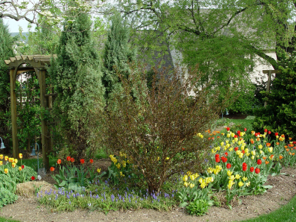
8.) Tulips. Rodents eat the bulbs and rabbits and deer bite off the flower buds of the survivors. Even when all goes well, most species peter out in a few years. Some types naturalize a little better than others, but again, the top-sellers are the shortest-lived ones.

The bane of hybrid tea roses -- a fungal disease called "black spot."
9.) Hybrid tea roses. If you’re not committed to a serious relationship with your sprayer, forget most of these. Prone to a long list of bugs and disease, particularly the leaf-dropping black-spot fungus and the dreaded Japanese beetle. All kinds of things can go wrong, and few people devote the time, money and effort to staying on top of it all.
10.) Japanese holly. Averse to transplanting, a high percentage of these croak in the first year out of the pot. Baby those young roots early on and then you’ve got a shot. Our lousy clay definitely does not do these any favor.

Comments
No comments