Whipping the Yard Back Into Shape
September 4th, 2012
Now that the worst of summer heat should be over (risky words, I know), now’s a good time to freshen up the yard for fall.
Fall is my second favorite time in the landscape. But it takes a little bit of clipping, weeding and replanting to make that happen.
Now’s when a lot of people look at the yard and see an overgrown, browned-out, flopping mess. That tempts them to do one of two things: either shear and brutally whack the whole place or just stay inside and not look out.
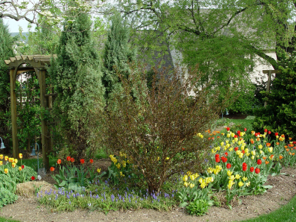
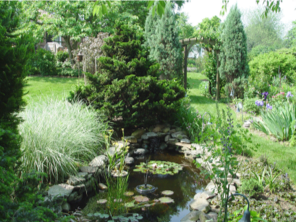
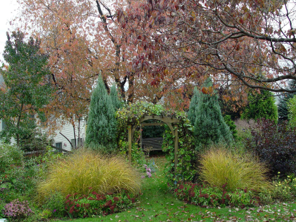
I go with Option 3: an outdoor version of a good house-cleaning. I had some extra motivation to get that done over the weekend because our yard is on the Penn-Cumberland Garden Club’s “September Song” tour this Saturday (http://georgeweigel.net/georges-talks-and-trips).
My wife and I spent much of Labor Day just yanking weeds that somehow managed to sprout despite the super-hot weather. It seemed like a worse weed year than usual to me. What didn’t help in my case was putting down a mulch of leaf compost from the township last fall and forgoing mulching in the spring.
I usually try to keep about an inch of wood or bark mulch over my beds to hold down weeds and conserve moisture. That’s getting harder both time-wise and back-wise, so I’ve been trying to spread out the work between spring and fall. When I went to put down mulch last fall, the township was out of wood mulch. So I went with the leaf compost instead.
This is great stuff… about the texture of dark, fine soil. But it works much better as an amendment dug into garden soil as opposed to a mulch on top. I think the weeds actually appreciated the topping of compost.
Anyway, the yard looks a lot better just having the weeds cleared out and tossed in my compost pile.
We then staked up some of the flopping perennials (not as effective as staking them before they flop but better than doing nothing) and clipped the browned-out flowers off the summer bloomers (both perennials and flowering shrubs).
There’s a big difference between dead-heading and pruning. Dead-heading removes spent flowers while pruning removes leaves, stems and branches.
Fall is actually the worst time to do heavy pruning of woody plants. You’ll either cut off the forming flower-bud wood of next spring’s bloomers or encourage new growth at a time of year when plants are starting their annual slide into dormancy. End of winter through early summer are far better times to do most pruning.
I didn’t do any size-control pruning of anything over the weekend. All of the cutting was either things like snipping the browned flowers off the butterfly bushes and cannas or doing some very light tip pruning to slightly neaten a few things that were hanging too far into something else.
Some people like the plant intermingling that happens this time of year. I’m OK with some of that, but when two things collide more than mingle, that’s when I step in with my “referee pruners.”
One other thing that made things look much better — a fresh weed-whacking of the bed edges to neaten the lines between grass and gardens. A coat of mulch would be the coup de grace, but I don’t have the time or energy to do that right now.
What we did do was tuck in a few new plants to fill some bare gaps and empty spots where there’s not much going on.
Mums are the easiest, quickest fix. I also bought a few annuals for fall color, such as some purple pansies, a ‘Calico’ variegated hot pepper and a couple of white euphorbias that were on sale.
We also snuck a couple of porch pots into the garden gaps. Voila! Instant flowers.
It definitely looks a lot better. I’m happy that the stage is set now for my existing plants to start taking on their fall colors in another few weeks… assuming it doesn’t go back up into the 90s in October.



Hey, George, I wasn’t sure whether part of your fall cleanup here might include yanking all the impatiens so that mildew stuff doesn’t infect other nearby stuff? I’m wondering if I should even turn over my diseased impatiens bead, or at least pull them all up - just like weeds - so they don’t spread their bad stuff. This is all too bad, but we have so much other shade lovers to choose from, I think I’ll get over losing the impatiens.
Trish,
No need to worry about downy mildew killing other plants in your yard in addition to impatiens.
This fungus-like water mold (Plasmopara obducens) is apparently specific to impatiens. It doesn’t pose a threat to other species.
If you’ve got signs of the disease, it’s a good idea to yank your impatiens and toss them (not in the compost). The idea isn’t to keep it from spreading to other plants but to reduce the amount of spores that stick around in the soil to infect future impatiens.
Flip a few of your impatiens leaves over to see if you notice any whitish coating forming on the leaf undersides. That’s as good of a downy mildew indicator as any.
If you’ve got diseased impatiens, odds are pretty good you’ll get this disease again next year whether you turn the soil over or not. I’ve been hearing the spores can stick around anywhere from 1 to 5 years.
Even if your impatiens aren’t infected and your soil doesn’t end up with dropped spores, that’s still no guarantee you won’t get downy mildew next year. The way this disease blew in and spread so fast, I think it’s a good idea if we all switched to another shade annual at least for next year until we see how this plays out.
Reason: diseases need three things to thrive. One is the presence of the pathogen (we’ve got that). Second is the environmental conditions that favor the disease (had that this year, too). The third key is having host plants that the disease needs. Take those away and the disease slacks off.
I think Reason No. 3 is why this disease took off so fast. People grow impatiens everywhere. It’ll be hard to stop downy mildew altogether, but with fewer impatiens out there to feast on next year, at least a few of those nasty little molds will go hungry.
George,
Can’t believe it’s been almost a year since you were here giving me ideas and info. I did manage to do some of the suggestions and then there were some things that came up (life) that has prevented me from finishing. I do have a question for you regarding the knock out roses. I believe you stated you have cut yours back to about a foot high to maintain size but I cannot remember when it is ok to do this. Do I wait until end of March or is it ok to do before Halloween? Thanks for your time and happy gardening! Wish I could have made the tour!
Eva
Hi George,
I’ve noticed that some people’s Winterberry are already loaded with those wonderful red berries. I have three bushes in the front of the house and none of them have berries, although all of them had blossoms. This has been a continual problem for me ever since they were planted. I have a male pollinator, Appolo, at the end of my lot. It was planted by a Landscaper, so I assume that it is within the appropriate distance. It has not grown much since it was planted, but it does get blossoms each year. My question is: What should I do to get the beautiful red berries on my winterberry bushes? Should I plant Jim Dandy as a pollinator? When should it be planted, and how close to the Winterberry plants should I plant them? Is now the time to plant a pollinator, or should I wait until Spring? I’m disappointed once again that I have no berries. Please help!
Thanks,
Eileen
Hi Eva,
Time does fly, and life and gardening don’t always mesh. But at least landscapes are patient and forgiving.
I cut my ‘Knock Out’ roses back to about ankle high at the end of winter, i.e. around late March. You won’t hurt or kill them by pruning in fall, but if you want to shorten them before next spring, wait for the leaves to drop and then take them back by about a third. Then go back the rest of the way after winter. I keep mine compact, neat and blooming almost constantly by regular snips and light shearings a few times throughout summer.
George
Hi Eileen,
I’d first double-check to make sure the three bushes out front are females. You can tell by the form of the flowers in spring. Male flowers have little skinny projections with pollen on the tips, while females have tiny green BBs (ovaries) that sit in the base of the petals. Send me a picture in spring if you’re not sure.
Second, do you know what variety of females you have? If you know that, you can match up the correct male pollinator. ‘Winter Red,’ for example, mates best with ‘Southern Gentleman,’ but ‘Maryland Beauty’ works better with ‘Jim Dandy.’
But even if you don’t know what female you’ve got, you can play matchmaker by making sure your male is in flower at the same time. The
better the overlap between male and female flowering, the better the fruit set. If you have space, you can always plant a second or even third male so you’ll have pollen floating around just about any time a female is ready for it.
The closer you plant a male to a female, the better the set, too. You should get decent pollination within 100 yards.
You’re not pruning your plants in late spring or summer, are you? That’s one other factor that can stop fruiting — cutting off the wood that already had pollinated flowers or young fruits.
George