

Sneaky Dry
September 3rd, 2013
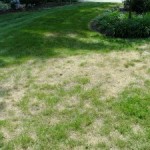
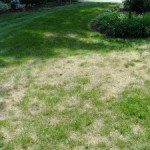
The biggest issue I’ve had in the garden since mid-summer has been the sneaky dryness.
Some years we get weeks of heat, sun and not a drop of rain, and everyone knows it’s dry.
Plants wilt, the leaf edges of trees and shrubs turn brown, and the lawn goes crunch when you walk on it.
Hard to miss that.
But this summer has had a lot of cloudiness, it hasn’t been that brutally hot, and a lot of days have looked like it could rain at any time.
A fair number of days, it did actually rain a bit.
No need to water in those conditions, right?
The fake-out with that kind of weather is that moisture never really does work its way down into the root zone where it can do its magic.
A trace of rain does nothing more than wet the soil surface or the mulch, making it look like the ground is damper than it really is.
I was surprised several times last month when I dug down into my soil a few inches down, only to find dust… not much different than those 95-degree Augusts when it doesn’t rain for 3 straight weeks.
That explains the paltry growth and bloom I’ve seen on a lot of my annual flowers. The ones along my front walk – within the canopy of two large oak trees – are still pretty underwhelming despite two or three sprinklings I’ve given them since July.
As fast as I put water on, the oak roots suck it up. A 1- or 2-inch soaking rain would do way more good than I can do with a hose.
The other thing with summer weather is that rain tends to come in isolated storms.
One area could get a decent dumping while the next town over gets nary a drop.
It seems my yard has been missed by most of the storms this year.
I did get a little over a half-inch from a storm Sunday night, but it came and left in about 20 minutes. I’ll take it, but an inch over a day would be better if I could place an order.
Although the soil has been dry, the air has been humid, and that’s added up to a worse-than-usual season for leaf disease.
Most leaf diseases flourish when there’s ample moisture on the leaf surface. Those little traces of rain are good at wetting leaves, and humid air alone provides enough surface dampness to fuel fungal growth.
Powdery mildew has done a number on a variety of my garden plants, including beebalm, phlox, dogwood, ninebark and squash.
Curiously enough, I still haven’t seen much trouble from the dreaded downy mildew disease that wiped out everyone’s impatiens last year. The people who risked planting them this season are still enjoying decent displays. Even my little 4-pack of pink ‘Accent’ impatiens – planted mainly to monitor the status of mildew – is still blooming away in the backyard shade.
I heard some gardeners have run into late blight lately with their tomatoes, but I haven’t seen it myself yet. My tomatoes usually die a slow death from septoria leaf spot and early blight before late blight has a chance to get them. Late blight is the particularly deadly disease that can shut down a seemingly healthy patch of tomatoes in a matter of days.
And one last gardening issue worth complaining about is one that’s been more of a problem for the gardener than the plants – biting bugs.
I don’t know if it’s just my yard or what, but I’ve had more biting bugs flying around these last few weeks than I can ever remember.
Unlike deer flies or even black flies – bugs that I can see biting me – little welts just show up on ankles, hands and fingers.
I’m suspicious of chiggers, which are such tiny bugs that they’re often called “no-see-‘ums.”
It’s either them or tiny mosquitoes.
All I know for sure is that these surreptitious biters hurt, and they make even me think twice about whether I really want to go out and pull a few weeds.
Why doesn’t sneaky dryness kill pesky little bugs?




Yes, George, I have been watering, and you have reminded me again to do it this morning. Agreed on the impatiens - those I have seen have been healthy looking. Agreed on the biting bugs!! But how about this one - has it been a bad weed year? Some have said this - it doesn’t seem that way in my yard, what about yours?
I can’t complain about the weeds (OK, I could, but they haven’t been any worse than usual and maybe even less so). The biting bugs are what’s getting on my nerves… and skin.
I worried that my Impatiens balfourii from Charles Cresson would succumb this year but the plants have done well and continued to attract hummingbirds.
I’ve seen most impatiens looking pretty good so far this year. But just this weekend, I turned the leaves over on my only four “monitoring” impatiens and saw the beginning of that grayish film from downy mildew. It’ll be interesting to see what happens down the stretch…
It’s been a banner year for crabgrass in a lot of lawns in my neighborhood. I suspect some companies or individuals applied crabgrass control too early or missed areas as we’ve had no problem in our own yard. (The strip behind me that’s “maintained”-mowed way too short and way too early in the day with no attempt whatsoever at weed control-by Mayapple golf course would be a disaster if I hadn’t been digging weeds, but I can show you there that even crabgrass and dandelions can be controlled by digging if one keeps after them!)
I’ve had impatiens come up from seed from last year and the patches that have come up look great. However I do have a problem with a bush that I several of, I forget the name of them, reddish with thorns, but some type of bagworm gets to them, eats off the top branches and builds this silky cocoon with what looks like droppings. Usually happens in late summer. What are they? Anyone know?
Cynthia,
The plant sounds like red barberry, but they usually don’t run into any bug trouble. From the sound of things, the bug might be fall webworms, which build cocoons this time of year, usually in the tips of tree branches. No need to treat for that kind of damage. The plant will grow through late-season chewing damage and be fine next year.
George
I, too, have been plagued by invisible biting bugs leaving large, itchy welts. I finally got smart and am now wearing my “birding” clothes whenever I’m in the garden. The clothes are treated with Permithrin to prevent insect bites, and so far, so good!
I found bagworms on St. John’s Wort ‘Albury Purple.’ Never expected to see that!
And I have perennials covered with grayish leaves…thought it was powdery mildew but now am wondering if it is downy mildew. It has been on coreopsis, Joe Pye Weed, and bee balm (which is more expected than the first two plants).
Another challenging summer
Patti,
Like Roseanne Roseannadanna used to say on Saturday Night Live, it’s always something. I can do without the biting bugs. Bagworms actually are attracted to some deciduous trees and shrubs, although I’ve never seen any on my St. Johnsworts. And I think it’s powdery mildew on the coreopsis, Joe Pye and beebalm (all are prone to that). My wife’s phlox are also toast now from powdery mildew.
George
Funny that I should read this today…I just had my first experience with what may be what George is talking about… the “no see ums” biting bugs. When I reached into a clump of sedum to stake it I felt an immediate sharp stinging pain on each hand. Felt like a bee sting but it never swelled, and to have a site on both hands at once was really weird. The nasty pain lasted around a half hour. I have no marks to show for it either. Very strange! Guess that’s what I get for not wearing my gloves. I certainly hope these critters get some natural predators pronto!!